
Water Clarity at 6:30 AM: Why the First Boat to Molokini Sees More
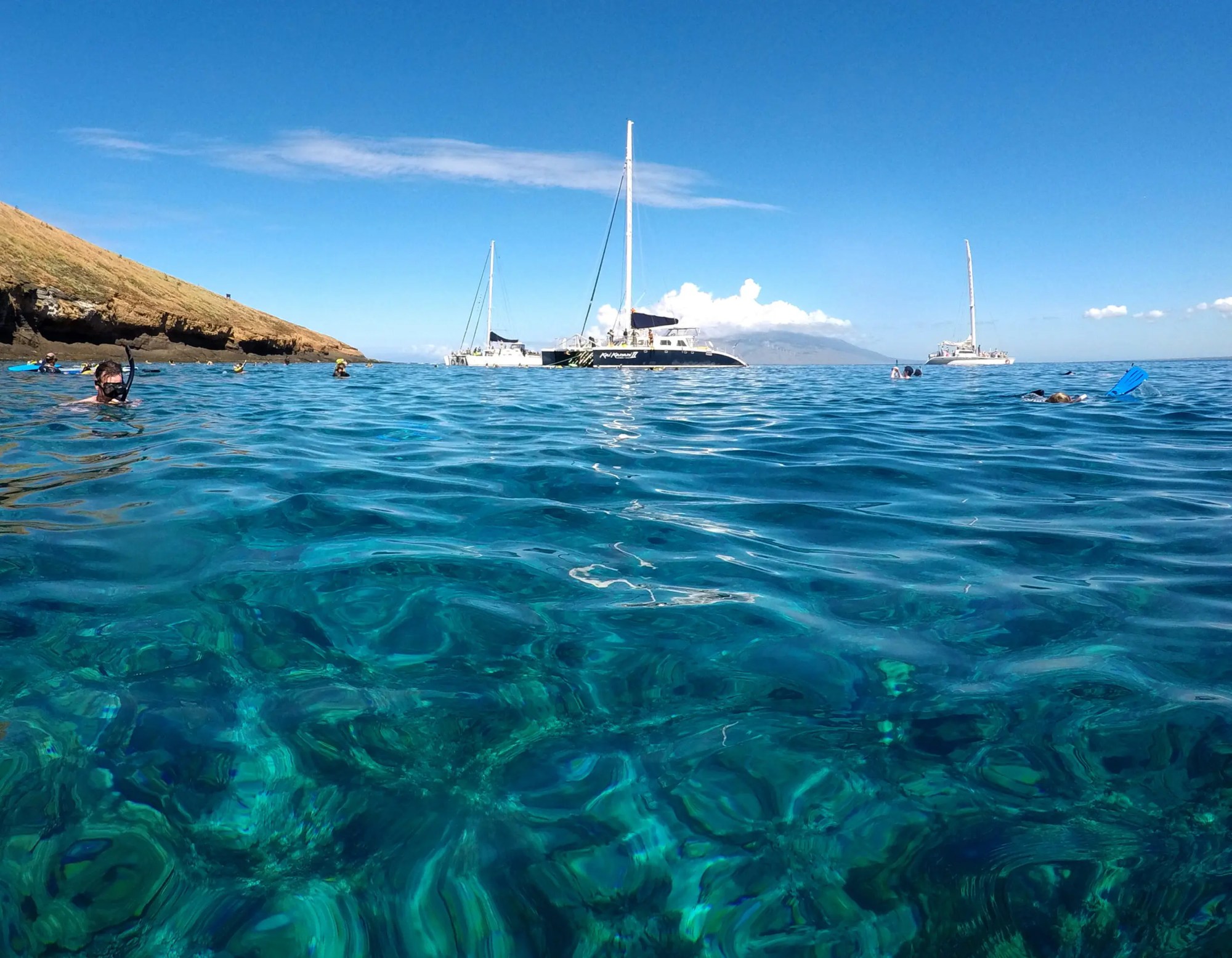
Molokini is famous for exceptionally clear water, vibrant coral, and abundant reef fish. But the quality of your snorkeling experience depends on more than the destination itself. Wind, surface conditions, boat traffic, and the number of people in the water can all affect what you see.
That is why the first boat to Molokini often sees more. An early arrival gives you the best chance of experiencing the crater before the trade winds strengthen and before additional boats arrive. For many visitors, the early wake-up call is worthwhile because it can mean calmer water, clearer viewing conditions, and a quieter reef.
Why early morning conditions are often clearer
Molokini lies approximately three miles off Maui’s southwestern coast and is accessible only by boat. Its inner cove is protected as part of the Molokini Shoal Marine Life Conservation District, which helps preserve its coral habitat and diverse marine life.
The crater’s water is naturally clear, but conditions can change throughout the day. During the early morning, the ocean surface is often calmer and the wind is typically lighter. As the day progresses, trade winds may build across Maui’s waters. Wind creates chop on the surface, making the ride less comfortable and making it more difficult to keep your mask and eyes steady while looking below.
The difference is especially noticeable for first-time snorkelers, children, and anyone who prefers a smooth boat ride. A calm morning crossing can make it easier to relax, listen to the crew’s instructions, and spend more time enjoying the reef instead of adjusting to motion.
Morning conditions are not guaranteed. Weather, swell, currents, and visibility can change from one day to the next, and the captain always makes the final decision about where it is safe to snorkel.
What changes when more boats arrive?
Being among the first boats at Molokini is not only about wind. It is also about timing the reef before the site becomes busier.
As more boats arrive, more snorkelers enter the water at the same time. That can make it harder to find an open area to observe fish and coral without other swimmers in your immediate view. Boat noise, surface activity, and increased traffic can also make the experience feel less peaceful.
Arriving early gives you more uninterrupted time to observe the crater’s underwater landscape. You may have a better opportunity to notice smaller details, such as schools of yellow tang, colorful reef fish, coral formations, and the openings where moray eels sometimes hide.
Molokini is home to a remarkably diverse marine ecosystem. Hawaiʻi tourism materials describe more than 250 species of fish in the area, including species found only in Hawaiʻi. The Marine Life Conservation District also protects coral, reef habitat, and other geological features, so visitors should never touch, feed, or remove anything from the water.
Does 6:30 AM guarantee perfect visibility?
No. An early start improves your odds, but it cannot guarantee a particular level of visibility.
Visibility depends on several factors, including wind, swell, current, recent weather, water movement, and the location selected by the captain. The official Molokini Shoal guidance notes that currents outside the cove can be strong and may intensify during afternoon winds.
It is also worth remembering that “sunrise snorkel” does not always mean the crater will be fully illuminated at the moment you arrive. Depending on the season and the position of Haleakalā, the crater side may still be partly shaded early in the morning. The main advantage of an early trip is usually calmer conditions and less traffic, not a promise of perfect lighting.
Why the departure location matters
South Maui’s location can provide an important timing advantage. Kai Kanani loads guests at Maluaka Beach in Makena, close to the open water. Its Sunrise Deluxe Snorkel page states that the company is the first snorkel boat into Molokini in the morning and spends approximately 45 minutes enjoying the crater before the day becomes busier.
The tour check-in is currently listed at 5:45 a.m. at the Kai Kanani Store, with beach loading at Maluaka Beach. The experience includes coffee, hot chocolate, cinnamon rolls, breakfast, and a later stop at Turtle Town to look for Hawaiian green sea turtles. Kai Kanani states that the tour returns to its store by approximately 10 a.m., leaving much of the day available for other activities.
For visitors staying in Wailea, Makena, or elsewhere in South Maui, a South Maui departure can reduce the time spent traveling to the launch point and may help the boat reach Molokini earlier.
What to expect on an early Molokini snorkel
An early departure requires planning. Guests should prepare for a pre-dawn check-in, bring a light layer for the boat ride, and follow the crew’s guidance about entering and exiting the water. Anyone who is prone to seasickness may also want to ask the operator about appropriate preparation before the trip.
Once at Molokini, conditions may be calm and glassy, or they may be affected by wind and swell. Stay within the designated snorkeling area, avoid touching coral, and do not feed fish or other marine life. Molokini is also a state seabird sanctuary, and landing on the islet is prohibited.
The best operators will adjust the itinerary when needed. A different snorkeling site, shortened water time, or weather-related cancellation is preferable to taking unnecessary risks. Safety and ocean conditions should always come before a promised schedule.
Is the first boat to Molokini worth the early wake-up?
For travelers who care most about water clarity, calmer conditions, and a quieter experience, an early Molokini snorkel is usually the strongest choice. It does not guarantee perfect water or unlimited marine-life sightings, but it puts you on the water during the part of the day when conditions are often most favorable.
The first boat may see more because it arrives before the wind builds, before the crater becomes crowded, and before the reef is surrounded by additional boat traffic. At Molokini, timing is part of the experience.
Frequently asked questions
What is the best time of day to snorkel Molokini?
Early morning is generally the best time to snorkel Molokini because wind and surface chop are often lighter, and fewer boats may be at the crater.
Why is water clarity better at 6:30 AM?
Morning water is often calmer, with less wind-driven surface disturbance and less boat and swimmer traffic. Actual visibility still depends on weather, swell, currents, and the captain’s assessment.
Does Kai Kanani arrive first at Molokini?
Kai Kanani states that its South Maui departure makes the Sunrise Deluxe Snorkel the first snorkel boat into Molokini in the morning. The schedule and destination remain subject to weather and the captain’s discretion.
Do I need to be an experienced swimmer?
No. Molokini tours are designed for a range of experience levels, but guests should be comfortable following crew instructions and using snorkeling equipment in open water. Ask the operator about flotation support and accommodations before booking if needed.
Can I land on Molokini?
No. Molokini is a state seabird sanctuary, and landing on the islet is prohibited. Visitors should also avoid touching coral, feeding fish, or removing any marine life, sand, or geological material.